
The U.S. government on Monday ordered its agencies to stop using artificial intelligence tools from Chinese startup DeepSeek, as the countries race for dominance in the fast-moving sector.The U.S. government on Monday ordered its agencies to stop using artificial intelligence tools from Chinese startup DeepSeek, as the countries race for dominance in the fast-moving sector.Business[#item_full_content]

Nvidia CEO Jensen Huang urged Germany’s makers of cars and industrial machines to quickly adopt artificial intelligence to “reengineer” the country’s struggling business model by tapping its wealth of manufacturing data and expertise.Nvidia CEO Jensen Huang urged Germany’s makers of cars and industrial machines to quickly adopt artificial intelligence to “reengineer” the country’s struggling business model by tapping its wealth of manufacturing data and expertise.Business[#item_full_content]

A robot artificial intelligence (AI) system has been developed that can understand human instructions, predict what a scene will look like after an action and then carry out the task. Rather than simply translating instructions into physical movements, the technology also uses the anticipated outcomes of those actions to control the robot.A robot artificial intelligence (AI) system has been developed that can understand human instructions, predict what a scene will look like after an action and then carry out the task. Rather than simply translating instructions into physical movements, the technology also uses the anticipated outcomes of those actions to control the robot.[#item_full_content]

A robot artificial intelligence (AI) system has been developed that can understand human instructions, predict what a scene will look like after an action and then carry out the task. Rather than simply translating instructions into physical movements, the technology also uses the anticipated outcomes of those actions to control the robot.A robot artificial intelligence (AI) system has been developed that can understand human instructions, predict what a scene will look like after an action and then carry out the task. Rather than simply translating instructions into physical movements, the technology also uses the anticipated outcomes of those actions to control the robot.Robotics[#item_full_content]

Digital Care Hub has launched a series of new resources to help adult social care providers plan how they will communicate with key stakeholders in the event of a cyber incident. These include people receiving care, families, staff, partner organizations and relevant public bodies.Digital Care Hub has launched a series of new resources to help adult social care providers plan how they will communicate with key stakeholders in the event of a cyber incident. These include people receiving care, families, staff, partner organizations and relevant public bodies.[#item_full_content]

As humans and AI models roam the internet, they encounter lots of junk: clickbait headlines, misinformation, hashtags. Research by Dr. Zhengzhong Tu and his colleagues indicates that this junk-filled environment could be a cause for concern.As humans and AI models roam the internet, they encounter lots of junk: clickbait headlines, misinformation, hashtags. Research by Dr. Zhengzhong Tu and his colleagues indicates that this junk-filled environment could be a cause for concern.Internet[#item_full_content]
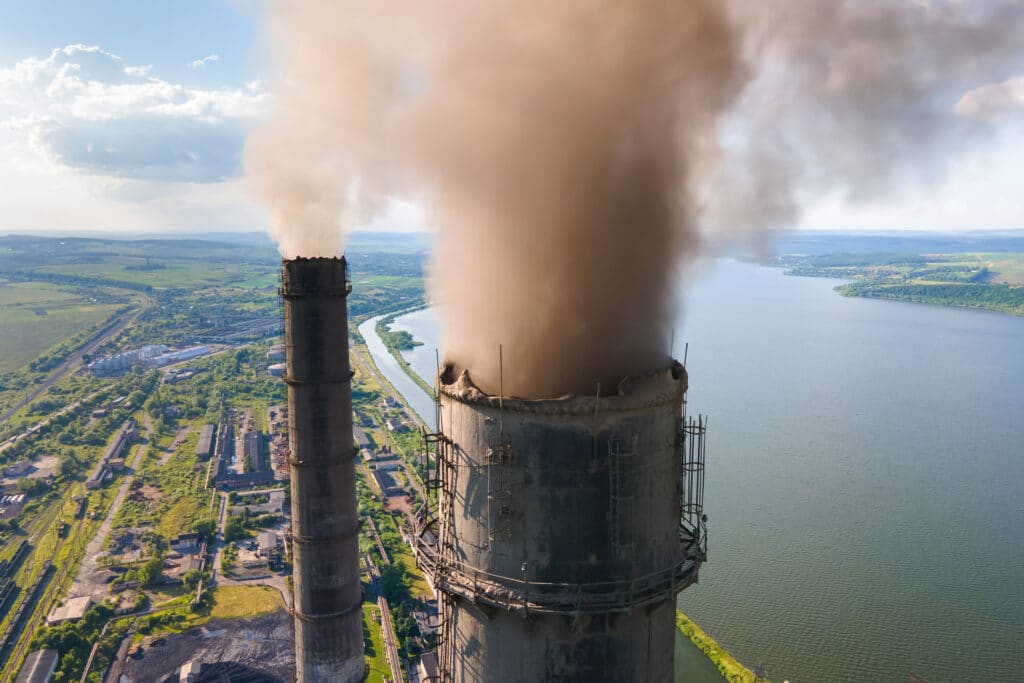
Households In Every State Will Pay More for Energy Under New Policy Choices
It’s no secret energy costs are skyrocketing – Americans are feeling pain at the pump when they fill up their cars and are facing hard choices every time a utility bill arrives.
The Iran War has become a common excuse, and while it has certainly raised gasoline prices,[1] a more pervasive reason is driving the affordability challenges facing Americans: Dramatic changes in federal energy policy coming from Washington, D.C.
A mix of executive and legislative action by the Trump administration and Congress has repealed pollution guardrails for fossil fuel power plants, eliminated emissions standards for gas-powered vehicles, cut incentives for cleaner hydrogen production, built artificial barriers for states and utilities that want to build cheap solar and wind energy projects, and terminated tax credits for clean energy.
Analysis from Energy Innovation[2] spells out what these shifts will cost the U.S. economy and how they’ll impact energy affordability for Americans for years to come. The news is dire, and unfortunately only on a path to get worse unless federal elected officials make better policy decisions.
How Federal Policy Changes Affect the Lower 48 State
Energy policy in the United States has been completely overhauled since January 2025 when the Trump administration and 119th Congress took office. Modeling shows policy choices made since[3] then are significantly harming America’s economy and increasing energy prices for households and businesses — ranging from electricity prices, to job growth, to vehicle and housing costs, all the way to lost opportunities for green hydrogen production.[4]
By using all federal energy policies that were cutting costs, cleaning our air, and generating new jobs and investments in January 2025 as a “frozen in time” baseline, EI’s analysis compares what would have happened to energy prices, economic activity, and public health between 2025 and 2040 to what will now happen due to federal policy choices. It assesses a range of implications for how these changes will impact Americans living in the lower 48 U.S. states.
Nationwide, households in every state will pay more for energy – an additional $920 billion through 2040, or $6,500 per household. Several states will be harder hit, paying more than $9,000 per household. Gas will also be 93¢ more expensive per gallon by 2040, America’s workforce will lose an average of 390,000 lost jobs per year, and the economy will miss out on $1.3 trillion in cumulative GDP while accumulating $72 billion in additional healthcare costs.
EI’s modeling factors in major changes to federal policy during this time, including eliminating clean energy and electric vehicle tax credits through the One Big Beautiful Bill Act[5] (OBBBA); the Environmental Protection Agency’s (EPA) repeal of air and power plant wastewater standards; reversing federal tailpipe pollution standards for gas-burning vehicles; and other policies chipping away at diverse production of wind, solar, and green hydrogen.
The analysis holds state-side policy constant, except for the impact of §177 Congressional Review Act resolutions (which otherwise would have allowed states to adopt stronger vehicle emission standards). While higher gasoline prices due to the Iran War is factored into EI’s projections, tariffs are not included in the modeling, so the assessment of increased costs – particularly on households – is conservative.
The Five “Biggest Losers” On Household Energy Costs: Oregon and Mississippi Pay The Most
The burden of higher energy bills from Trump administration and Congressional policies won’t be shared equally, among households, or between states – households in the hardest-hit states could pay as much as $1,200 more per year.
The five states facing the highest household energy bills increases are:
Oregon ($9,300)
Mississippi ($9,100)
South Dakota ($9,000)
Virginia ($8,900)
Wyoming ($8,900)
These costs will grow over time as demand for expensive fossil fuel rises, pushing up average prices. For instance, U.S. gas consumption will jump 4.6 percent.[6] from the Trump administration’s repeal of vehicle fuel economy standards, pushing lifetime vehicle fuel costs by more than $1,600.
Average national energy spending increases almost triple from 2030 to 2040, jumping from $230 per household per year to $780 per year. Transportation makes up the lion’s share of these higher energy costs, a projected 87 percent of overall increases by 2040, as the price of gas rises everywhere.
Which States Will Suffer The Worst Economic Damage From Lost Jobs And GDP?
America’s clean energy industry has been an economic engine in recent years, reaching 3.5 million workers by the end of 2024 and growing three times faster than the broader U.S. economy.[7] Federal policies throw that engine in reverse across the clean energy industry and electric transportation manufacturing, as well as industrial segments providing clean heat, green hydrogen, and other clean technologies.
Nationwide, EI models show that federal energy policies alone will cost the U.S. about 390,000 jobs per year on average and a cumulative $1.3 trillion in GDP losses — adding up to 6.2 million lost job-years nationally.
Five states will suffer the biggest hit to their statewide workforce: Wyoming is expected to lose 0.6 percent of its employment, compared to business-as-usual — followed by Mississippi (0.5), Iowa (0.4%), Montana (0.3%), Arkansas (0.3%).
Looking across the full economy, California will face the largest loss to statewide GDP ($160 billion). For scale, that’s a loss comparable to the entire GDP of Morocco.[8] Texas ($150 billion), New York ($93 billion), Florida ($81 billion), Georgia ($48 billion) round out the top five “biggest losers” in GDP. As some of the largest economies in the U.S., these five states carry nearly half – 42 percent — of total U.S. GDP loss expected by 2040.
Which States Will Suffer The Worst Air Pollution And Public Health Damage?
Policies that hold back clean energy development in favor of fossil fuels don’t just cost Americans through job losses and rising energy prices. Toxic air and water pollution from burning fossil fuels harms human health, including premature death. Tiny particulate matter (PM 2.5) from burning coal poses a particularly high risk,[9] while exposure to nitrogen oxides (NOx) and sulfur dioxide (SO2) is linked to asthma and other respiratory illnesses.[10]
These have real costs for Americans in terms of wellbeing, livelihoods, and the ability to work – but they also drive up healthcare costs. Nationwide, current federal policies are projected to cost 37,000 additional premature deaths, driven by PM 2.5, SO2, and NOx from extended fossil generation and delayed transition to electric transport. The U.S. faces an additional $72 billion in health care costs, as well as 9.3 billion tons of additional greenhouse gas emissions, which worsen expensive extreme weather events.[11]
Five states will suffer the most additional premature deaths: California (6,500), Texas (6,000), Florida (3,200), Indiana (2,900), Pennsylvania (2,500).
States with a higher rate of coal burning will see proportionately higher deaths per capita, including Indiana (2,900), Ohio (2,000), Kentucky (1,900), Utah (1,500).
State healthcare systems will also incur rising costs due to current policies, with Texas ($11 billion), Indiana ($4.8 billion), California ($4.2 billion), Kentucky ($3.2 billion), Georgia ($3.1 billion) shouldering the highest burden.
Here’s how government officials can protect their constituents from the energy affordability crisis
Smart federal policy is essential to addressing energy affordability. However, state and local leaders can still insulate their constituents from the harms of federal policy shifts and repeals and lower the cost burden on Americans.
EI’s Blueprint for States[12] offers a range of no-regrets near-term actions local and state policy-makers can undertake — including removing barriers to clean energy development, bolstering the transition to electric transportation, stimulating investment in new clean industries, adopting modern energy codes, and supporting technologies that provide clean efficient heat and cooling in buildings and factories.
While these actions can’t replace the pollution reductions and total affordability measures provided by strong federal policy, they can limit price increases, improve health, and add new capacity to the grid.
[1] Lydia DePillis, “Inflation Was Moderate In July, But Energy Prices Remain Elevated,” The New York Times, August 2026, https://www.nytimes.com/live/2026/08/12/business/inflation-cpi-report/.
[2] Olivia Ashmoore, Robbie Orvis, Daniel O’Brien. “Economic, Consumer Cost, Pollution Impacts of Federal Energy Policy Changes In 48 U.S. States,” Energy Innovation, October 2026, https://energyinnovation.org/report/economic-consumer-cost-pollution-impacts-of-federal-energy-policy-changes-in-48-u-s-states/.
[3] Robbie Orvis and Dan O’Brien, “Economic, Consumer Cost, and Pollution Impacts of Federal Energy Policy Changes,” Energy Innovation, July 2026, https://energyinnovation.org/report/economic-consumer-cost-and-pollution-impacts-of-federal-energy-policy-changes/.
[4] Dan Esposito, “What To Know About Final 45V Tax Credit Rules For Electrolytic Hydrogen: A Win For Consumers, Industry, And Climate,” Energy Innovation, January 2025, https://energyinnovation.org/expert-voice/what-to-know-about-final-45v-tax-credit-rules-for-electrolytic-hydrogen-a-win-for-consumers-industry-and-climate/.
[5] Robbie Orvis, Megan Mahajan, and Dan O’Brien, “Final Analysis: Economic Impacts Of U.S. “One Big Beautiful Bill Act” Energy Provisions,” Energy Innovation, July 2025, https://energyinnovation.org/report/updated-economic-impacts-of-u-s-senate-passed-one-big-beautiful-bill-act-energy-provisions/.
[6] Jean Chemnick, “Trump Slashes Biden-Era Economy Standards For Cars,” Politico, September 2024, https://e2.org/releases/report-clean-energy-jobs-grew-3x-faster-than-rest-of-u-s-workforce-in-2024-but-future-growth-now-at-risk/.
[7] E2, “Report: Clean Energy Jobs Grew 3X Faster Than Rest Of U.S. Workforce In 2024, But Future Growth Now At Risk,” E2, September 2025, https://e2.org/releases/report-clean-energy-jobs-grew-3x-faster-than-rest-of-u-s-workforce-in-2024-but-future-growth-now-at-risk/.
[8] Global Finance Magazine, “Morocco,” Global Finance Magazine, https://gfmag.com/country/morocco-gdp-country-report/.
[9] Lucas Henneman et al., “Mortality Risk From United States Coal Electricity Generation,” Science, November 2023, https://www.science.org/doi/10.1126/science.adf4915/.
[10] World Health Organizations, “Air Quality, Energy And Health,” World Health Organization, https://www.who.int/teams/environment-climate-change-and-health/air-quality-and-health/health-impacts/types-of-pollutants,.
[11] National Centers For Environmental Information, “Billion-Dollar Weather And Climate Disasters,” National Centers For Environmental Information, https://www.ncei.noaa.gov/access/billions/.
[12] Mike O’Boyle, Sara Baldwin, Chris Busch, Michelle Solomon, Brendan Pierpont, Sonali Deshpande, Nik Sawe, and Dan Esposito, “Energy leadership In A Time Of Need: A Blueprint For States,” Energy Innovation, August 2025, https://energyinnovation.org/report/energy-leadership-in-a-time-of-need-a-blueprint-for-states/.
The post What Changes in Federal Energy Policy Mean for Americans appeared first on Energy Innovation.
Modeling shows policy choices are significantly harming America’s economy and increasing energy prices for households and businesses — ranging from electricity prices, to job growth, to vehicle and housing costs, all the way to lost opportunities for green hydrogen production.
The post What Changes in Federal Energy Policy Mean for Americans appeared first on Energy Innovation.[#item_full_content]

Like a hack writer or a friend rehashing their glory days over and over, artificial intelligence tends to tell the same old story. For AI agents instructed to write fiction, that tale usually involves lighthouses and a keeper named Elias, according to new Cornell research.Like a hack writer or a friend rehashing their glory days over and over, artificial intelligence tends to tell the same old story. For AI agents instructed to write fiction, that tale usually involves lighthouses and a keeper named Elias, according to new Cornell research.Computer Sciences[#item_full_content]

Like a hack writer or a friend rehashing their glory days over and over, artificial intelligence tends to tell the same old story. For AI agents instructed to write fiction, that tale usually involves lighthouses and a keeper named Elias, according to new Cornell research.Like a hack writer or a friend rehashing their glory days over and over, artificial intelligence tends to tell the same old story. For AI agents instructed to write fiction, that tale usually involves lighthouses and a keeper named Elias, according to new Cornell research.[#item_full_content]

Satellite images of the Earth are not always easy to use. Clouds can block the view of the ground, and images captured with some methods look different from ordinary photographs, which makes them difficult to interpret. A KAIST research team has developed an artificial intelligence model that learns the appearance of diverse terrain and cities. The model can restore cloud-covered images and convert radar images into images that resemble ordinary photographs. It applies what it learned while generating satellite images to a range of image-processing tasks, so it is expected to expand the use of satellite data in disaster response and environmental monitoring.Satellite images of the Earth are not always easy to use. Clouds can block the view of the ground, and images captured with some methods look different from ordinary photographs, which makes them difficult to interpret. A KAIST research team has developed an artificial intelligence model that learns the appearance of diverse terrain and cities. The model can restore cloud-covered images and convert radar images into images that resemble ordinary photographs. It applies what it learned while generating satellite images to a range of image-processing tasks, so it is expected to expand the use of satellite data in disaster response and environmental monitoring.Machine learning & AI[#item_full_content]
